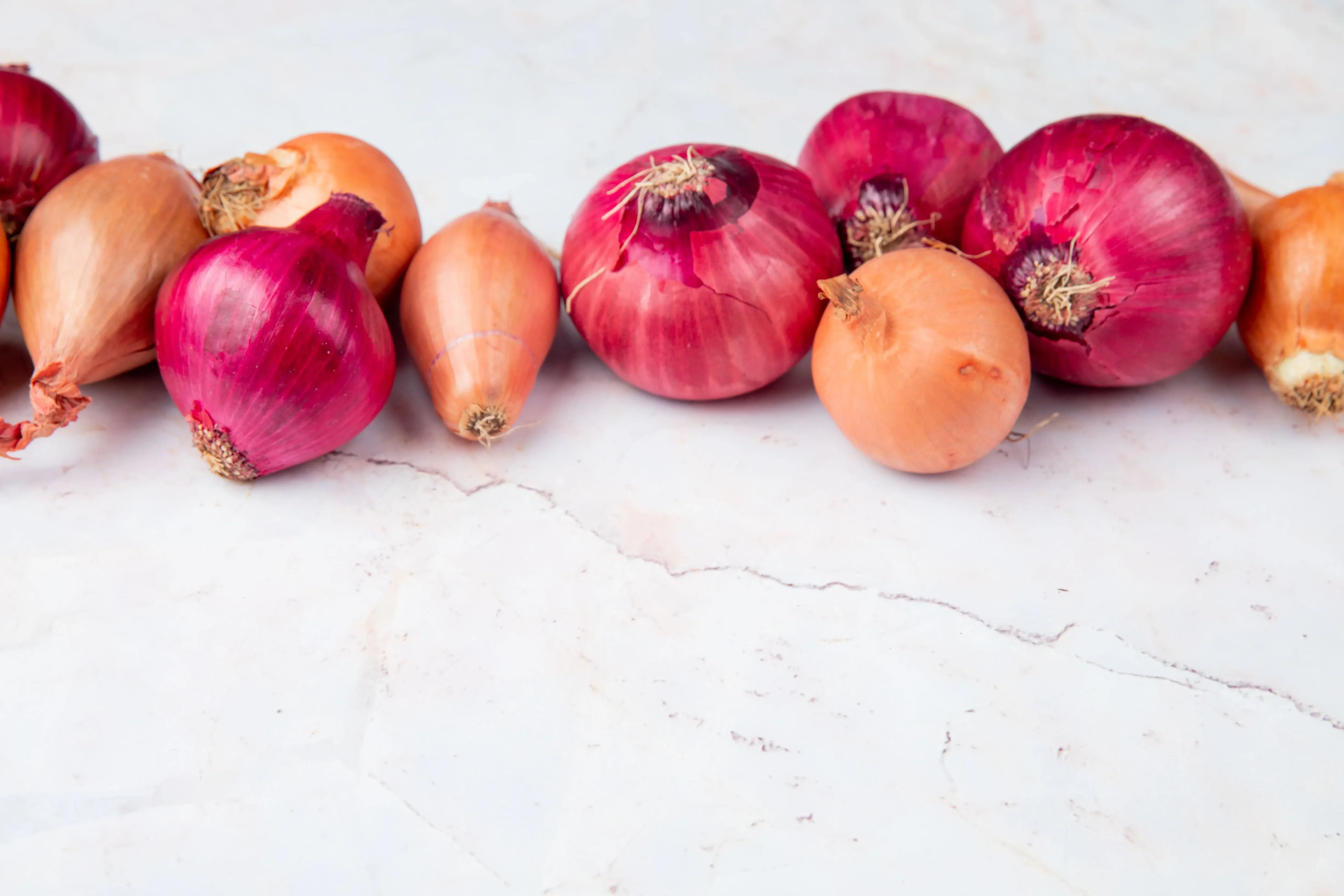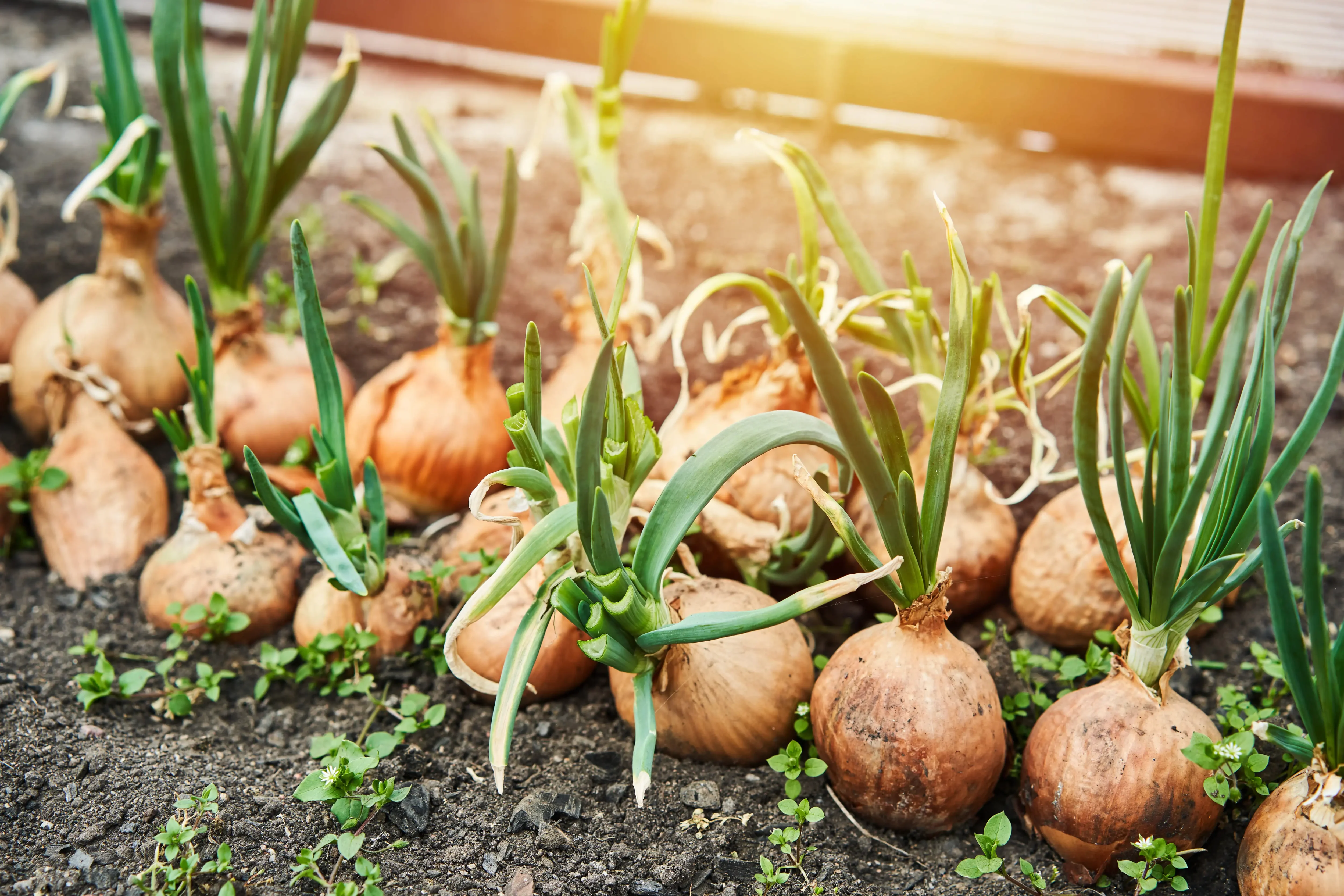
Spanish onion play a prominent role in European vegetable production. The region’s diverse climate, the varieties’ adaptation to photoperiod, and the accumulated experience of growers result in Spanish onion with very different characteristics depending on their growing region, production cycle, and market destination.
For distributors, wholesalers, buying cooperatives, retail chains, and food industry professionals, understanding the characteristics of a Spanish onion and their availability is particularly important, as seasonality can influence purchasing plans, while factors such as variety, size, dry matter content, storage life, and postharvest conditions will determine the product’s performance during marketing.
In this article, Cebollas Aparici takes an in-depth look at the main characteristics of a Spanish onion, their production regions, and the factors that determine their availability throughout the year.
What characterizes Spanish onion production?
When we talk about Spanish onion, we are not referring to a single product. Spain has different growing regions and variety-specific harvest schedules, so the market offers onions suited for both fresh consumption and long-term storage and distribution.
Among the main factors that characterize Spanish onion production are:
- Varietal diversity: There are short-day, medium-day, and long-day varieties, adapted to different growing conditions.
- Climatic diversity: From Mediterranean areas to regions with a continental climate, growing conditions vary greatly.
- Different commercial applications: Certain onions are intended for fresh consumption, while others have a long shelf life.
- Wide variety of sizes and formats: This allows producers to meet the needs of different distribution channels and market segments.
- Agricultural and technological expertise: Production combines traditional knowledge with irrigation systems, monitoring, and precision agriculture techniques.
- Supply capacity: The succession of growing seasons and production areas ensures a relatively continuous supply throughout the year.
This diversity is precisely one of the main strengths of Spanish onion in a professional market that demands consistency, uniformity, and the ability to plan ahead.
When are Spanish onions available?
When asked when Spanish onions are available, the truth is that the answer depends on the variety, the growing region, the planting date, weather conditions, and the storage method. Therefore, there is no single availability season for all Spanish onion.
Broadly speaking, the schedule is structured as follows:
| Period | Main characteristics |
| Autumn–winter | Production from previous growing seasons and stored onions, together with certain early-cycle crops. |
| Spring | Progressive increase in the supply of fresh onions from autumn–winter growing cycles. |
| Summer | Period of high onion harvesting activity, particularly for long-day onions, with product entering the market for both fresh consumption and storage. |
| Autumn | Marketing of stored summer product continues, while new crops are introduced depending on the region and variety. |
Therefore, Spanish onions are available year-round—12 months a year—thanks to a combination of growing seasons, different varieties, and post-harvest storage systems.
Main national production areas for spanish onions
Furthermore, the geographic distribution of Spanish onion production accounts for much of the market’s diversity.
Valencia region: Focus on the fresh, quick-consumption market
The Mediterranean climate of the Valencia Region favors certain early production cycles and products intended for fresh consumption.
New onions with short and medium growing cycles are a good example of how the characteristics of the growing season influence the final product: freshness, water content, texture, and postharvest behavior may differ from those of a mature onion intended for storage.
Castilla-La Mancha: Production and storage capacity
Castilla-La Mancha is one of Spain’s leading regions for onion production. Its continental climate, with dry summers and high solar radiation, favors the development of varieties with growth cycles adapted to these conditions.
The region plays a particularly important role in the production of onions intended for long-term storage and distribution, a strategic aspect for the professional supply chain.
Castile and León: Adaptation to the continental climate
Castile and León has distinctly continental climatic conditions and a well-established agricultural tradition.
Seasonal temperature variations necessitate the selection of adapted varieties and planting schedules. The result is a crop that yields onions with good firmness and storage characteristics, which are particularly important for long-term supply chains.
Aragón: Diversity and high-quality produce
Aragón is another important region for medium- and long-day varieties within Spain’s onion production landscape. The combination of climate, available farmland, and production expertise allows for the cultivation of different types of onions.
Regional production contributes to the diversity of origins available to the domestic and European markets.
Andalusia: Early-season varieties
Finally, the climatic conditions in southern Spain allow for the development of different growing cycles compared to areas with a continental climate.
Andalusia also stands out for certain early-season short- and medium-day onion varieties, which are particularly important for kickstarting the supply of the new harvest throughout Europe.
What factors determine the quality of Spanish onion?
The commercial quality of an onion does not depend solely on its origin. A professional buyer must consider a set of agronomic and post-harvest parameters.
- Size and uniformity: Size has a direct impact on commercial presentation and the efficiency of certain industrial processes.
In addition, the uniformity of a batch facilitates sorting, packaging, and product management at distribution centers.
- Firmness: Firmness is particularly important when the product must withstand transportation, handling, and storage.
- Dry matter: Dry matter content is related to various characteristics of the onion, including its behavior during storage and certain industrial applications.
- Skin and bulb protection: Proper formation and adhesion of the outer layers help protect the bulb from damage during handling and help maintain its marketable condition.
- Health status: The absence of rot, damage, sprouting, and other defects is essential for maintaining the quality of the batch during distribution. Therefore, postharvest management should be considered an extension of the production process rather than a separate stage.
What a professional onion buyer should consider
As we mentioned earlier, when selecting a supplier of Spanish onion, origin is important, but it should not be the only criterion.
It is advisable to evaluate the following factors together: variety and agronomic characteristics, origin and growing season, size and uniformity, suitability for storage, condition of the skin and neck, firmness, packaging specifications, traceability, supply capacity, consistency of batches, logistical requirements, and the product’s final destination.
Ultimately, the right choice depends on the specific needs of each business.
Cebollas Aparici: Professional year-round supply of spanish onions
At Cebollas Aparici, we operate with a vision focused on both the professional market and the end consumer, combining product knowledge, variety selection, and supply planning.
Our product range includes different types of onions to meet the needs of distributors, wholesalers, retailers, and other operators in the food supply chain.
Our goal is not only to offer high-quality Spanish onions but also to provide a supply solution tailored to each client, taking into account the season, the product’s destination, the packaging format, and logistical requirements.
If you’re looking for a supplier who can help you plan your onion supply year-round, please browse our product range or contact our team directly to discuss your needs. We’d be delighted to assist you!